
“Moving into the desert meant taking a step into the realm of freedom: Freedom from slavery, freedom from obligatory subjection, freedom from exploitation, and especially freedom from possession.” Fr. John Chryssavgis
In his book, In the Heart of the Desert, Fr. John Chryssavgis explains that women were considered to be the possession of their fathers, husbands, or a master. Fleeing to the Egyptian deserts to become monastics, women found the freedom necessary to live committed to the kingdom of God. The bonds of secular society did not apply to the wilderness. Women became nuns with Abesses guiding them. In mixed company among monks, their words of spiritual wisdom were highly regarded. To highlight this point, the author refers to the Apostle Paul’s words to the Galatians, “There is neither Jew or Greek, slave or free, male or female; for all of you are one in Christ Jesus.”

In my search for parallels between the Desert Fathers and Great Dismal Swamp Maroons, I see another reason to be inspired by the men and women of the swamp. The Maroons practiced a faith forged in freedom. It’s not hard to see the Christianity that came from our enslaved ancestors: hush arbors (clandestine places of worship), designated meeting houses, Negro spirituals (some of which had codes for escaping to the North or ridiculing the enslavers for their hypocrisy). Much of this vein of African American denominations is known, honored, and celebrated (as it should be).

The Maroons didn’t run to a hidden shed of cedar bushes for midnight prayer and return to the plantation in the morning. They took their freedom and religious practices with them permanently. There are no historical markers of their worship places nor record of sermons or songs. We can visit old churches and sing the old hymns of the enslaved and formerly enslaved. What about the self-absconded and hidden ancestors? Where can we go to honor them? What music and words can we use to remember them?

More archaeological and historical work will be done in the Great Dismal Swamp (and other places where there were Maroon communities). I think the point is to be inspired and free to look deeper in the Christian faith than what was given to them. If “The Kingdom of God is within you,” then we are to be mindful our walk with the Lord. As did the Desert Fathers and Mothers, we need to spend time in prayer and examining our actions, words, and thoughts. We should strive to see our own sins and be repentant. Love for one another must be a great priority. Much of the Christianity of colonial and antebellum America were opposed to freedom and equality for the enslaved. Thus, the Maroons took the truth of Jesus Christ and applied Him in their hearts to live in God’s Kingdom despite the wickedness around them.
Let’s be inspired to be free to be saints. “If you wish, you can become all flame.”
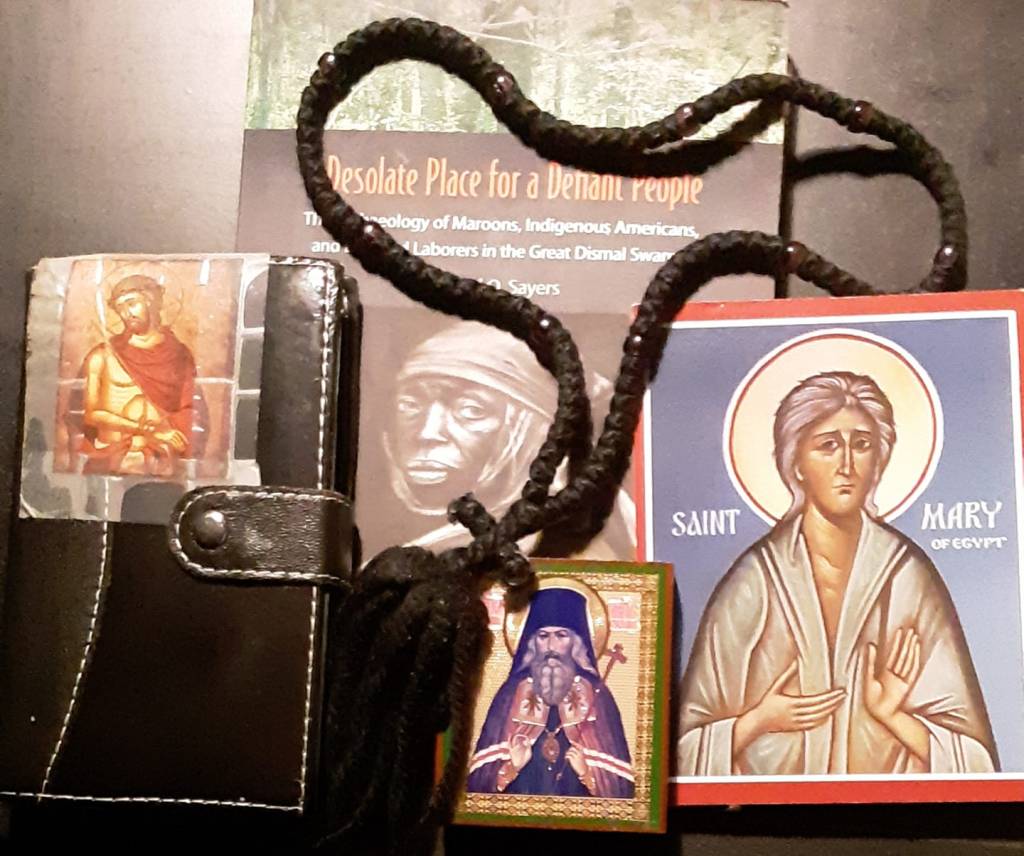
In The Heart of the Desert, pgs. 89-91
Galatians 3:26-29
Luke 17:20-21
Sayings of the Desert Fathers, Joseph of Panephysis #7

