
The Black Preacher is someone who is well known in American History. Dr. Martin Luther King Jr., Rev. Jessie Jackson, Adam Clayton Powell come to mind for most of us. Scholars will even point to such men as Bishop Richard Allen, Gowan Pamphlet, and others. Let me add one other name to your mind. A man known not for any particular sermon or leading any sort of congregation or movement. His very existence, location of his ministry and the people he served, in my opinion, points to sometning more than an earthly house of worship.
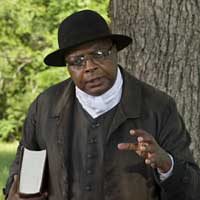
The Great Dismal Swamp of VA and NC was the home of up to 10,000 runaway slaves known as the Maroons. Between 1730 and the 1860’s this community found freedom in very difficult conditions. Except for a few scattered ‘islands,’ there was no dry land to be cultivated or built upon. The tanglements of briars and thick bushes between the trees made the swamp nearly impassable. Beyond the terrain were swarms of bitting insects, venomous snakes, bears, and panthers. Some slave catchers would go into the Great Dismal, many avoided it as the place was too dangerous. Many figured if an enslaved person made it there, he or she wouldn’t survive very long.
According to a fugitive in Canada, there was a holy man among them. “Ole man Fisher was us boys preacher. He runned away and used to pray like he’s ‘n earnest. I camped wid him. Many’s been de ‘zoration I have ‘sperienced, dat sounded through the trees, and would almos’ ‘spect de judgement day was commin’, dar be such loud nibrations, as de preacher called dem, especially down by de lake.”(1) We don’t even know his first name. Needless to say there is no record of him with a recognized congregation. We can say that Ole Man Fisher was respected among the Maroons and was trustworthy enough to have a close follower or two. He was known for the sincerity of his prayers and his sermons caused a particular sound through the trees reminding them that Judgement Day would come.
Of course, there are no text of what was preached, words of prayers, nor record of his advice. Had it not been for this snippet of a slave narrative, the memory of this Maroon preacher would be lost. But, even the unnamed men of God serve as worthy examples of the spiritual life. Consider among the Desert Fathers in Egypt, Arsenius was discovered seeking advice from an indigenous peasant.(2) Credibility is gained by those who share in the struggles of this world, not by seeking social elevation from others. One’s character must match a reputation worthy of following. Jesus invited two men to come and see how he lived before they committed to follow him. (3) Praying is not simply talking to God for good luck. It is being in His presence despite the difficulties of life. Let’s be watchful over our souls as we will have to give an account of our lives.
(1) The Roving Editor: Talks with Slaves in the Southern States, James Redpath, pg. 244
(2) The Sayings of the Desert Fathers, (translated by) Benedicta Ward, pg. 10
(3) John 1:35-51

